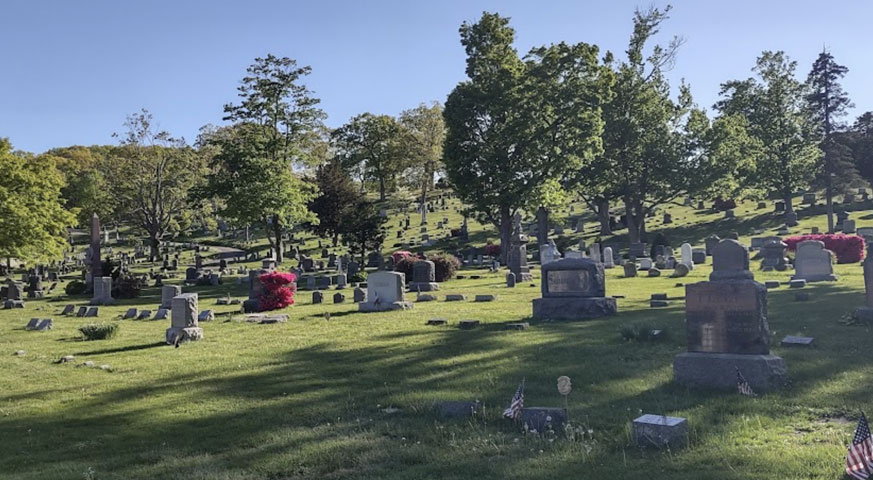
How to Choose a Cemetery Monument: The Complete Guide for Long Island Families
Choosing a cemetery monument is one of the most meaningful decisions a family can make after the loss of a loved one. A monument serves as a permanent tribute—one that honors a life, preserves memories, and provides a place for reflection for generations to come. While the process can feel overwhelming, understanding the key considerations early on can make it far more manageable.
At St. Charles Monuments, we have guided families across Long Island through this process for decades. This complete guide walks through every step of choosing a cemetery monument—from understanding your cemetery’s rules through installation day. Use the table of contents to jump to the stage you are in right now.
Not Sure Where to Start?
- Has the cemetery already been chosen? If yes, start with Step 1 and request the cemetery’s monument regulations. If no, see our guide on 4 Important Factors When Choosing a Cemetery first—cemetery rules determine which monuments are permitted.
- Is this an immediate need, or are you pre-planning? If immediate, contact St. Charles Monuments to discuss your timeline. If pre-planning, take your time—this guide walks through every step.
- Do you already have a monument type in mind? If you are starting from scratch, begin with Step 2 (monument types). If a type is already chosen, skip ahead to Step 3 (materials).
Table of Contents
- Step 1: Understand Your Cemetery’s Rules First
- Step 2: Choose the Monument Type
- Step 3: Select the Material
- Step 4: Set a Realistic Budget
- Step 5: Design the Monument
- Step 6: Write the Inscription
- Step 7: Choose Symbols and Artwork
- Step 8: Plan for the Future
- Step 9: Understand the Timeline
- Step 10: Work with St. Charles Monuments
- The Monument-Choosing Checklist
- Frequently Asked Questions
Step 1: Understand Your Cemetery’s Rules First
Every cemetery has rules and regulations regarding monument placement. Some cemeteries allow large headstone placements virtually anywhere. Others have rather strict rules regarding the size of every headstone that goes in the cemetery. As an example, Mount St. Mary Cemetery requires all upright headstones to have a base.
Many Long Island cemeteries also have policies regarding what type of material the headstone is to be made of. For instance, Mount Ararat Cemetery only allows granite monuments but does not allow black granite at all.
Once you’ve chosen your cemetery, you can call the cemetery or its website to see their rules and regulations. Ask the main office for the “monument regulations” or “interment regulations” sheet—every cemetery keeps one. The team at St. Charles Monuments can also request this on your behalf and provide guidance on what your options are for the memorial.
One expectation worth setting early: once a monument is designed and approved by the family, St. Charles Monuments submits it to the cemetery for permit approval. This adds 1-3 weeks to the timeline depending on the cemetery. Knowing this now prevents frustration later—see Step 9 for the full timeline.
Step 2: Choose the Monument Type
There are several types of cemetery monuments, and the right choice often depends on cemetery regulations, family preferences, and personal tradition.
| Your situation | Monument type to consider | Why |
|---|---|---|
| The cemetery only allows flush/lawn-level markers | Flat marker (grass marker) | Many memorial parks and newer sections require ground-level markers. Confirm with the cemetery first because this requirement eliminates the other options. |
| Budget is under $1,500 | Flat marker or slant marker | These are the most affordable options without sacrificing quality or personalization. St. Charles has options in this range. |
| Budget is $1,500-$4,000 | Slant marker or upright headstone | The most common range for a quality individual monument. Upright monuments at the lower end of this range are achievable with a standard design. |
| Family wants maximum space for inscriptions and artwork | Upright headstone | The vertical face provides the most surface area for names, dates, epitaphs, symbols, and custom etchings. |
| Two people will be memorialized together (spouses) | Companion/double upright monument | Designed with two panels: one complete now, one with space reserved. The layout is planned so additions look intentional, not added as an afterthought. |
| Multiple generations will be buried in the same plot | Family estate monument or large upright | Larger monuments can accommodate several names over time. Cemetery regulations on size must be confirmed before ordering. |
| The cemetery does not permit upright monuments but allows low-rise markers | Slant marker | A slant marker offers more visibility and inscription space than a flat marker while staying within height restrictions. |
| Family prefers above-ground entombment | Private mausoleum | Subject to strict cemetery approval and a higher budget. |
| Cremation was chosen and ashes will be interred | Flat marker, upright, or columbarium niche marker | Cemetery columbariums use niche plates. If ashes are buried in a plot, any standard monument type may apply depending on cemetery rules. |
| The family is pre-planning and has not yet chosen a cemetery | Decide cemetery first | Cemetery rules determine which monument types are permitted. Choosing a monument before a cemetery risks having to start over. |
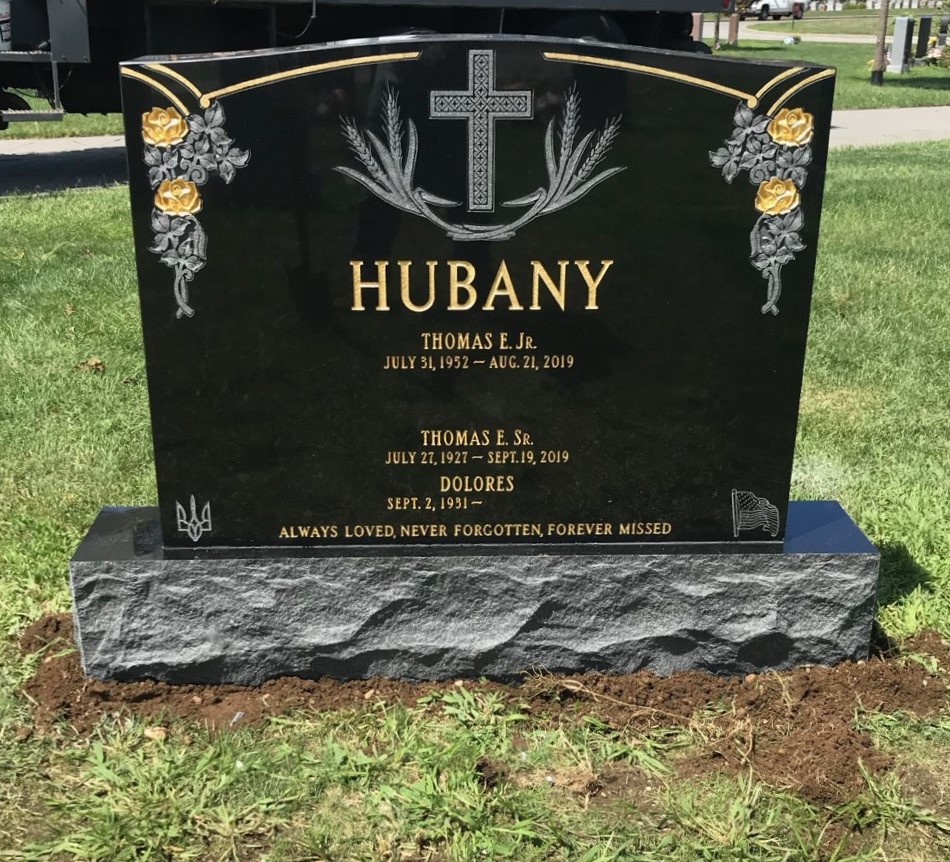
Upright Monuments (Headstones)
Upright monuments are traditional headstones that stand vertically. They are highly visible and allow for more detailed inscriptions, artwork, and symbolism. These monuments are often chosen by families who want a strong, lasting presence at the gravesite.
Private Mausoleums
Private mausoleums are freestanding structures designed to house one or more caskets or cremation urns above ground. These monuments offer families a distinctive and enduring way to memorialize loved ones while creating a private, dignified space for remembrance.
Often constructed from high-quality granite, private mausoleums can be customized in size, architectural style, and layout. Options may include single crypts, companion mausoleums, or larger family mausoleums intended for multiple generations. Interior features such as polished stone finishes, engraved panels, religious symbols, and seating areas can also be incorporated, depending on cemetery regulations.
Private mausoleums are subject to strict cemetery guidelines regarding placement, size, design, and foundation requirements. Not all cemeteries allow them, and those that do typically require detailed approvals before construction begins. Because of this, careful planning and professional guidance are essential.

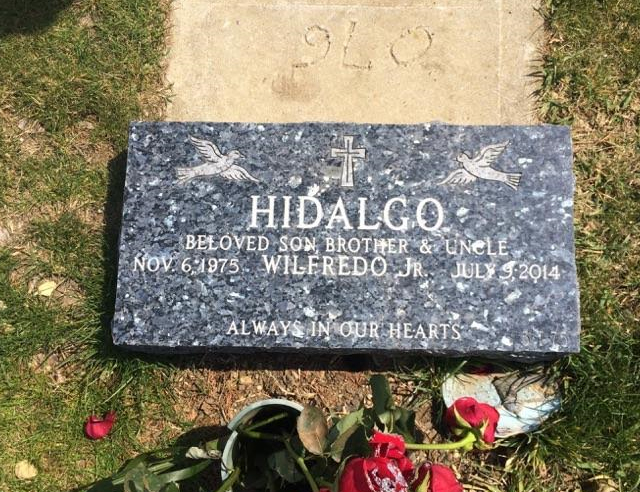
Flat Markers (Grass or Lawn Markers)
Flat markers sit flush with the ground and are common in memorial parks or lawn-style cemeteries. They offer a clean, simple appearance and are often easier to maintain. While more subtle, flat markers can still be beautifully personalized.
Slant Markers
Slant markers feature a gently angled face that provides improved visibility while maintaining a lower profile than upright monuments. They offer a balance between tradition and simplicity.

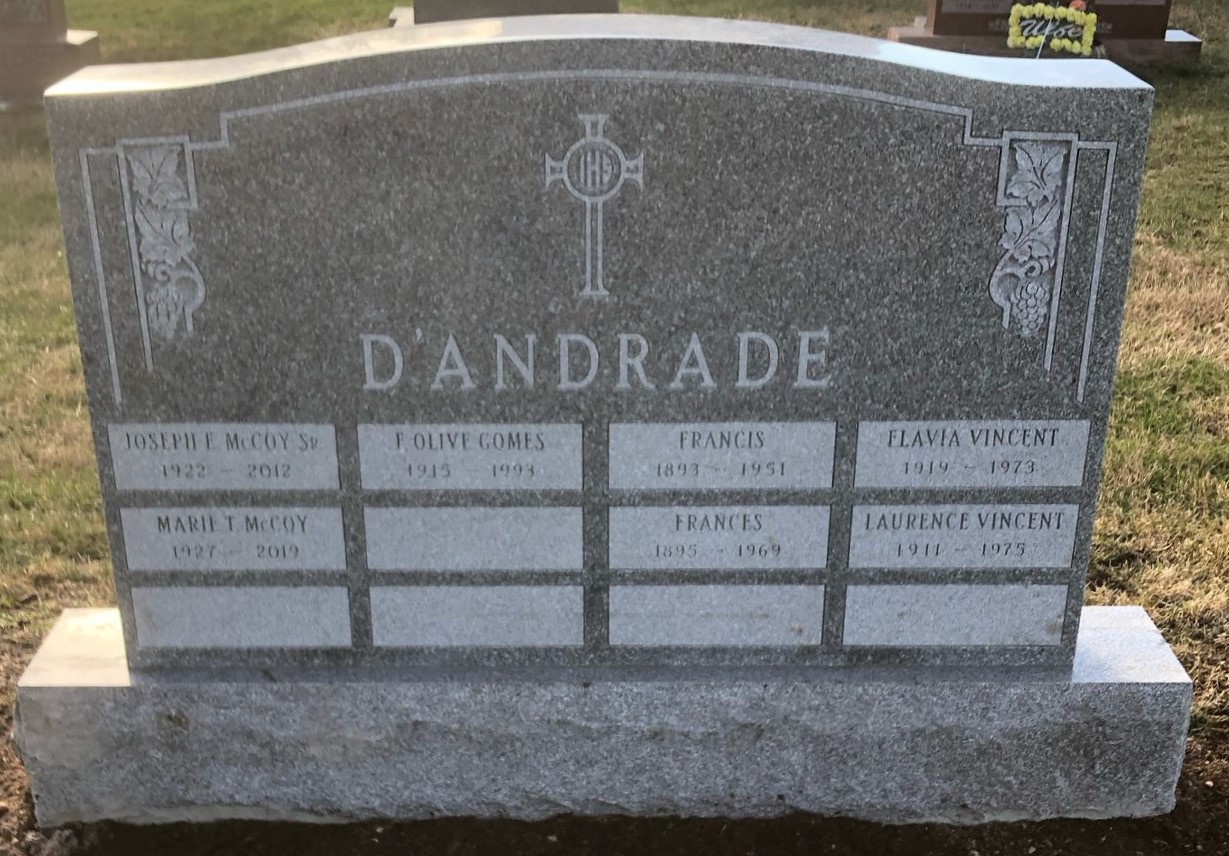
Family and Estate Monuments
Some families choose larger memorials designed for multiple burials. While these are typically subject to stricter regulations, they can serve as a meaningful family legacy when permitted.
Granite Bench
Families often choose memorial benches as a standalone monument or to complement an existing headstone. These benches provide a place to sit, reflect, and connect with cherished memories in a serene setting. Whether placed in a cemetery or a private garden, each bench adds a personal and heartfelt touch.
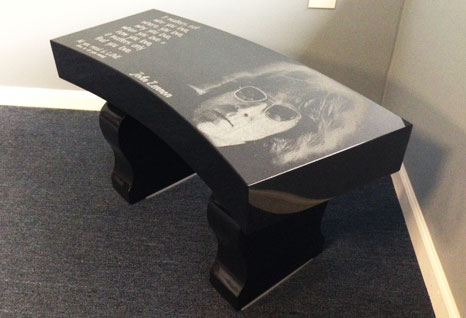
At St. Charles Monuments, we help families evaluate all available options and determine which monument type aligns best with cemetery rules, personal preferences, and long-term goals.
Step 3: Select the Material
The material you choose plays a major role in both the appearance and longevity of a cemetery monument.
Choosing the right material is a balance between durability, appearance, maintenance preferences, and budget. Our team at St. Charles Monuments takes the time to explain these differences so families can make informed decisions.
Granite Monuments
Granite is the most popular and durable material used for cemetery monuments. It withstands harsh weather conditions, resists erosion, and maintains its appearance for decades. This makes it particularly well-suited for Long Island’s seasonal climate. St Charles Monuments sources Dakota Granite, which is considered among the most durable available.
Granite is available in a wide range of colors, from traditional grays and blacks to warmer tones such as reds and blues. Color choice can subtly influence the monument’s character and visual impact.
Bronze Memorials
Bronze markers are often paired with granite bases and are commonly used for flat markers. They offer a classic appearance and allow for intricate detailing. Bronze naturally develops a patina over time, which many families appreciate as part of its character. Bronze does benefit from periodic cleaning to maintain its appearance—something to factor into long-term care.
Marble Headstones
In visiting your local cemetery, you may have noticed that many of the older headstones (of those buried between the 1840s and 1940s, more specifically), were crafted from marble. In the past, marble was much less expensive to cut, carve, and polish. It was the dominant material through the mid-20th century. In modern times, however, we have the technology available to more easily quarry, cut, and produce granite headstones. Therefore, marble headstones have begun to fall into obscurity.
While beautiful, marble headstones tarnish more easily with age and are more susceptible to automobile and industrial pollution. Obviously, this is a relevant concern across Long Island and New York metro area.
A brief note on limestone: it was occasionally used historically, but it weathers poorly in wet climates and does not hold inscriptions well over time. It is not a material St. Charles Monuments installs.
Step 4: Set a Realistic Budget
Budget is an important consideration when selecting a cemetery monument, but it is also important to understand what factors influence cost.
The table below shows general ranges by monument type. Every monument is priced individually based on size, color, and customization, so treat these as starting points for planning—the St. Charles Monuments team will provide clear, exact pricing during your consultation.
| Monument type | General price range |
|---|---|
| Flat marker | $500-$1,500 |
| Slant marker | $800-$2,000 |
| Upright headstone | $1,500-$5,000+ |
| Companion/double monument | $3,000-$8,000+ |
| Family estate monument | $8,000+ |
| Private mausoleum | $25,000-$150,000+ |
Within each monument type, the main factors that drive cost are:
- Monument size and style
- Granite color—imported colors typically cost more than domestic
- Level of customization and engraving detail
- Custom artwork and etching versus standard designs
- Expedited installation, when a rush timeline is needed
While it may be tempting to focus solely on upfront cost, families should also consider long-term durability and craftsmanship. A well-made monument is an investment in permanence and peace of mind.
Two things worth knowing as you budget. First, St. Charles Monuments does not charge sales tax on the final price of a monument—a genuine savings on a purchase of this size. Second, families who pre-plan can lock in current pricing, avoid making decisions under emotional pressure, and discuss payment options in advance.
At St. Charles Monuments, we work closely with families to provide clear pricing, flexible options, and honest guidance—ensuring there are no surprises and that every family finds a monument that fits both their vision and budget.
Step 5: Design the Monument
Monument design is where remembrance becomes personal. While cemetery regulations guide size and style, there is often significant flexibility in layout, engraving, and artistic details.
Key design elements include:
- The shape and proportions of the monument
- The placement of text and artwork
- The balance between simplicity and decorative features
Some families prefer a traditional design that emphasizes elegance and restraint, while others choose more expressive layouts that incorporate imagery, custom etching, or symbolic elements. There is no “right” or “wrong” approach—only what feels most meaningful to the family.
One design question families often ask about is the difference between a single-process and double-process monument—that is, whether the stone is cut and finished in one production stage or two. The double process produces cleaner detail and a more refined finish. We explain the difference fully in our post on why a double-process monument is better than a single-process monument.
Stone Finish
All headstones need a strong finish. The type of finish determines the stone’s durability and appearance over time. The three finishes you will hear about most are polished (shiny and reflective), honed (smooth but matte), and thermal (a rough, natural texture). Knowing these names helps you have an informed conversation during your design consultation.
As we mentioned earlier in this post, make sure you check out your chosen cemetery’s rules and regulations. Some cemeteries have rules against polished monuments because they tend to give off a strong reflectiveness. If your cemetery allows polished headstones, consider partially polished, pitched or honed stones. These will all help increase durability. If your headstone has 3 or more colors, a honed finish will give your stone more depth.
Lettering Styles and Engraving Techniques
Lettering style plays a major role in the monument’s overall appearance. The choice of font, depth, and finish can dramatically affect readability and aesthetics.
Popular lettering options include:
- Raised lettering, often used with bronze or applied granite letters
- Incised lettering, carved directly into the stone
- Polished or painted lettering for enhanced contrast
Each style has its own advantages in terms of durability and visual impact. Our team helps families select lettering that complements the monument design while maintaining long-term legibility.
Headstone Imagery
Many families prefer to include only text on their loved one’s headstone, but some favor including images. Images can include etchings of religious symbols, or flowers, or animals. Again, think about your loved one’s personality and what kinds of interests they had. St. Charles Monuments has a wide array of images for you to choose from. If you are including photography in your headstone, make sure you see proofs before finalizing the transaction.
Cameo Photos
A headstone cameo photo offers a timeless and personal way to honor your loved one’s memory. These elegant, full-color or black-and-white ceramic portraits are permanently affixed to the headstone or monument, creating a lasting visual tribute. At St. Charles Monuments, we carefully craft and install each cameo photo using durable, weather-resistant materials designed to withstand the elements for generations.
Step 6: Write the Inscription
The inscription is often the most powerful element of a cemetery monument. It preserves a name, a legacy, and a connection across generations.
The standard inscriptions, in order, are:
- Full legal name
- Nickname, if used (in quotes)
- Dates of birth and death
- Relationship descriptor (Beloved Father, Devoted Mother, etc.)
- Epitaph or quote
Inscription Length
How long can the inscription be? This depends on monument size and font choice. A general rule is that an upright monument can accommodate 4-6 lines of primary text comfortably; a flat marker typically accommodates 2-4. The St. Charles Monuments team proofs every layout before carving.
Inscription Font
The size and style of font is quite important when it comes to monument selection. Consider the size of the headstone and what font would fit best on it. This also depends on what your epitaph says.
If you prefer a traditional look, try using a Roman or Old English font.
Sans-serif fonts (like block lettering) are increasingly popular for modern designs and read clearly from a distance.
23K Gold Leaf Lettering
There are several key reasons why we at St. Charles Monuments use 23K gold leaf rather than cheaper alternatives like paint or vinyl. While the shape and color alone make beautiful and striking features, it’s the text that truly represents your loved one.
Gold leaf lettering adds visibility and elegance to a cemetery monument.
Proofing: Approve Before Any Carving Begins
One thing every family should know: once engraving begins, changes are not possible. That is why every inscription goes through a written proof approval process before any carving starts. St. Charles Monuments prepares a full layout showing the wording, spacing, fonts, and artwork, and nothing moves forward until the family has reviewed and approved it in writing. Take your time with the proof—it exists so there are no surprises on the stone.
Need examples and inspiration for the inscription? See our post on Headstone Inscription Ideas.
Step 7: Choose Symbols and Artwork
Many families choose to incorporate religious or symbolic imagery into a monument. These elements can provide comfort, express faith, and reflect cultural traditions.
Common symbols include:
- Religious Symbols: Crosses, Stars of David, menorah, praying hands
- Symbols of Peace: Angels, doves, or florals
- Military Insignia: Flags, military symbols
- Fraternal Emblems: Masonic square and compass, Knights of Columbus
- Personal Imagery: Nature scenes, hobbies, custom portraits
For veterans: military insignia are available for qualifying veterans, and the VA provides flat grave markers free of charge for eligible veterans. If your loved one served, ask the St. Charles Monuments team about incorporating military honors into the monument.
St. Charles Monuments has an extensive library of pre-approved symbols and designs. Families do not have to provide original artwork for most common choices.
For Jewish families choosing a Jewish Monument, view our Jewish Monument and Memorial Symbols post for more ideas.
For general symbolism, view our A Simple Guide to Popular Headstone Symbols post for more ideas.
Step 8: Plan for the Future
For families planning a companion or family monument, it is important to think ahead. Design layouts should accommodate future inscriptions without compromising balance or readability.
Planning ahead may include leaving space for additional names or dates, matching lettering styles for consistency, and ensuring symmetry in layout as inscriptions are added over time.
This forward-thinking approach helps preserve the monument’s visual harmony for years to come.
- Open date lines: when ordering a companion or family monument, it is standard practice to leave one date line open (no ‘death’ date for the surviving spouse or future family members). We will confirm with the cemetery whether they need to be notified when an open date is later completed.
- Adding inscriptions later: St. Charles Monuments can return to an existing monument to add new lettering when a companion burial occurs. Adding lettering is simple when planned for, and does not require a new monument.
- Pre-planning: Pre-planning a monument in advance of need allows the family to specify placeholder dates that are completed later.
Step 9: Understand the Timeline
A common question we get asked is: how long does this take? In a time when you are plagued with funeral arrangements, carrying out your loved one’s wishes, dealing with finances and lawyers, St. Charles wants to make choosing the cemetery monument simple for families.
| Stage | Typical duration | Notes |
|---|---|---|
| Initial consultation with St. Charles | 1-2 hours | In person at the showroom or by phone. Bring your cemetery plot information. |
| Design proof preparation | 3-7 days | St. Charles prepares a layout for family review showing the monument dimensions, inscription, and any artwork. |
| Family approval of proof | Varies | Families can take as much time as needed. Faster approval means faster installation. No carving begins until written approval is received. |
| Cemetery permit approval | 1-3 weeks | St. Charles submits the approved design to the cemetery on the family’s behalf. Timelines vary by cemetery. |
| Granite fabrication and engraving | 3-6 weeks | Depends on design complexity, granite color availability, and current order volume. |
| Delivery and installation | 1-2 weeks | St. Charles coordinates directly with the cemetery to schedule installation. The family does not need to be present. |
| Total typical timeline | 8-14 weeks from first contact | Rush situations can sometimes be accommodated — contact the St. Charles team to discuss your specific timeline needs. |
What Happens at Installation
Once the monument is completed and approved, installation is the final step. Proper installation is essential to ensure stability, longevity, and compliance with cemetery requirements. That includes foundation preparation, precise alignment and leveling, and accounting for weather and ground conditions on installation day. With professional installation, families can feel confident that the monument will stand securely and maintain its appearance over time.
While this timeline is realistic, that does not mean it reduces anxiety. This is why pre-planning matters. Families who wait until after a loss are working under pressure and tight timeframes. Pre-planning allows you to take your time with each step.
Step 10: Work with St. Charles Monuments
Choosing a cemetery monument is a deeply personal journey—one that combines emotion, tradition, and careful decision-making.
For more than 70 years, St. Charles Monuments has served Long Island families through that journey. Our showroom at 1280 N. Wellwood Ave. in West Babylon sits steps from several of Long Island’s major cemeteries—including Wellwood, Beth Moses, and New Montefiore—which means our team knows each cemetery’s specific rules and approval processes firsthand. We are proud members of the Monument Builders of North America (MBNA), the industry’s leading professional association.
Our promise is simple: no surprises on price, no pressure, and every monument approved by the family in writing before any work begins.
If you are ready to begin the process or have questions about monument design, inscriptions, or cemetery requirements, our experienced team is here to help—every step of the way. Call or text us at (631) 694-0943, visit the showroom Monday through Saturday, 9:00am-4:00pm (Sundays by appointment), or contact us online to get started.
The Monument-Choosing Checklist
Save or share this checklist with family members as you work through the process together:
- Request your cemetery’s monument regulations (or ask St. Charles to request them for you)
- Choose the monument type permitted by your cemetery and suited to your family’s needs
- Select the material—granite for most new monuments
- Set a budget range and ask what drives cost within your chosen type
- Work through the design: shape, finish, and lettering style
- Draft the inscription: name, dates, relationship descriptor, epitaph
- Choose any symbols, artwork, etchings, or a cameo photo
- Decide on open date lines if this is a companion or family monument
- Review and approve the written proof—nothing is carved until you sign off
- Confirm the timeline and let St. Charles handle the cemetery permit and installation
Frequently Asked Questions
How much does a cemetery monument cost?
As a general range: flat markers run $500-$1,500, slant markers $800-$2,000, upright headstones $1,500-$5,000+, companion monuments $3,000-$8,000+, and private mausoleums $25,000 and up. Final pricing depends on size, granite color, and customization. St. Charles Monuments does not charge sales tax on monuments.
How long does it take to get a cemetery monument?
The typical timeline is 8-14 weeks from first contact, which includes design proofing, cemetery permit approval, fabrication, and installation. Rush situations can sometimes be accommodated.
What do cemetery rules and regulations cover?
Cemetery regulations typically govern monument size, height, type, material, color, and finish. Every cemetery sets its own rules—some only allow flat markers, and some restrict materials or colors. Call the cemetery’s main office and ask for their monument regulations sheet, or ask St. Charles Monuments to request it on your behalf.
Can an inscription be added to a monument later?
Yes. When a companion burial occurs, St. Charles Monuments can return to an existing monument and add new lettering. This is standard practice for companion and family monuments and does not require a new monument.
What is the most durable monument material?
Granite is the most durable and popular monument material today. It resists erosion, withstands Long Island’s seasonal weather, and holds inscriptions clearly for generations. Marble and limestone were common historically but weather poorly by comparison.
Do veterans receive a free grave marker?
The VA provides flat grave markers free of charge for eligible veterans. Military insignia can also be incorporated into a family-purchased monument to honor a loved one’s service.