A Guide to Headstone Symbols and Their Meanings
If you visit a cemetery, you’ll notice symbols engraved on many of the headstones. You may think these symbols are chosen at random, but that’s far from true. Each symbol etched onto a gravestone has a very specific meaning, usually one with real significance to the person who passed. Grave art goes back thousands of years for exactly this reason: when there’s so much to say about a person’s life and your love for them, an image can say it in a single beautiful depiction.
Below is our full reference to the symbols you’ll see most often, what they mean, and a few things worth knowing before you choose one for a loved one’s memorial.
Table of Contents
- Symbols of Faith
- Birds and Flight
- Flowers and Plants
- Anchors, Hearts, Moons and Other Objects
- Choosing a Symbol for a Headstone
Symbols of Faith
Cross
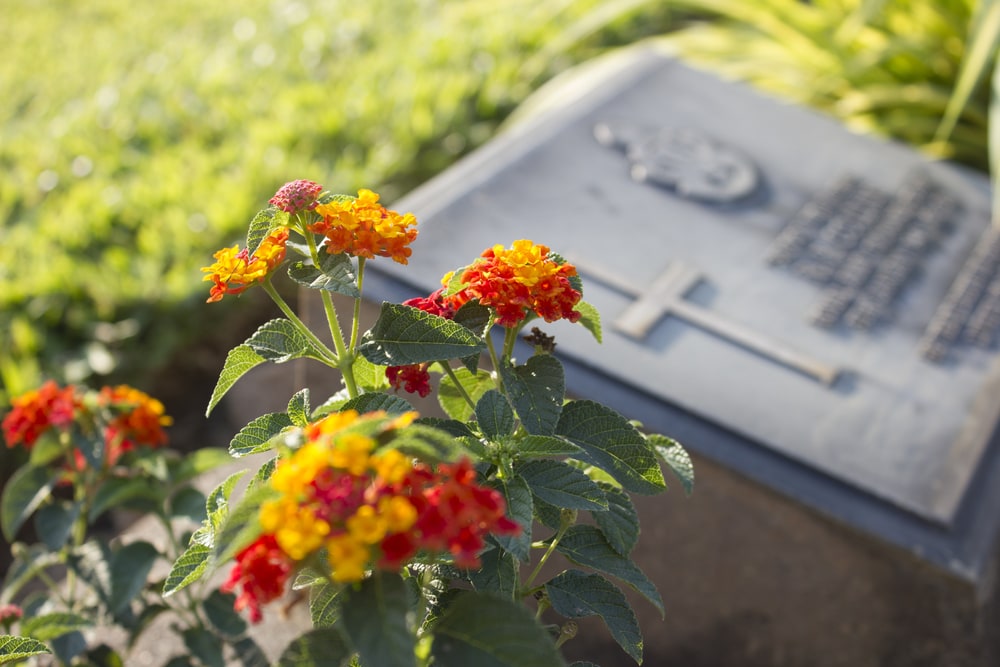
The cross is recognized as a symbol of the departed’s faith, and it also signifies resurrection. When found in a military cemetery, it takes on additional meaning: trials, victory, and reward.
Star
Stars represent divine guidance, and you’ll usually see one of two kinds. A five-pointed star represents the Star of Bethlehem. A six-pointed star stands for the power of God’s creation.
Triangle
The symbolism of an engraved triangle surprises people. It stands for truth, equality, and the Holy Trinity.
Sword
A sword on a gravestone stands for God’s protection of the departed. It’s meant to guard the grave from negative energies.
Jewish memorials draw on a separate symbolic tradition entirely, from the Star of David to the Kohanim hands. We cover those in our guide to Jewish headstone symbols.
Birds and Flight
A bird represents the departed’s soul, a tradition that traces back to the ancient Egyptians. Some cultures use only the wings in their grave art. The message is that the person’s life and spirit are eternal, and birds in flight in particular are often chosen when someone lived a short life, such as when a child passes away. A bird can also represent God’s peace.
Specific birds carry their own meanings:
| Bird | Meaning |
|---|---|
| Dove | The Holy Spirit, from the account of Christ’s baptism. Seven doves represent the seven spirits of God and the gifts of grace |
| Cardinal | Passion for life |
| Eagle | Symbol of St. John; courage, often with military affiliations |
| Owl | Wisdom |
| Peacock | Immortality; symbolic of Christ and the Resurrection |
| Pelican | Charity; in Christianity, the atonement and the Redeemer |
| Phoenix | Resurrection, the beauty of the soul, and immortality; a modern symbol of triumph through hardship |
| Rooster | Awakening to resurrection; vigilance |
| Swallow | Motherhood, or indicative of a child |
Flowers and Plants
Flower symbolism is something most of us already understand from daily life. You wouldn’t give your best friend red roses, because red roses mean romance. Grave art works the same way, with its own vocabulary. In general, flowers on a headstone symbolize the frailty of life, and bouquets represent condolences and grief.
| Flower | Meaning |
|---|---|
| Lily | Innocence, purity, and resurrection; associated with the Virgin Mary. Common on women’s headstones |
| Poppy | Eternal rest |
| Daisy | The innocence of a child; purity of thought and gentleness |
| Forget-me-not | Remembrance |
| Honeysuckle | Love, generosity, and devotion |
| Sunflower | A life that has been fulfilled |
| Asphodel | The classic flower of death, said to cover the Elysian Fields |
| Ivy | Eternal life, memory, friendship, fidelity, and undying affection |
| Broken blossom | A life cut short, whatever the flower |
The Rose Tells Its Own Story
Roses deserve a closer look, because carvers have long used them to say more than one thing. A rose symbolizes love, beauty, hope, and purity of soul. In Christianity it’s associated with the Virgin Mary, with a white rose signifying purity and a red rose martyrdom.
The stage of the bloom matters too. A rosebud traditionally marks the headstone of a child under twelve. A rose in partial bloom signifies a teenager. A rose in full bloom represents someone who died in their prime, typically their twenties or thirties. It’s one of the more poignant conventions in memorial art, and one many families don’t notice until they start looking closely at older stones.
Anchors, Hearts, Moons and Other Objects
Anchor
An anchor usually means the person loved the sea or served in the Navy. In spiritual terms it also symbolizes hope and strength. An anchor attached to a broken chain means a life was cut short.
Heart
A heart means love and devotion for the departed. Two hearts engraved on one monument specifically represent a happy marriage.
Moon
A moon can appear rather mystical on a monument, and it stands for death, rebirth, and victory.
Choosing a Symbol for a Headstone
These are only a portion of the engravings you’ll see in a cemetery, and choosing one comes down to what best captures the person you’re honoring. A few things we tell families:
- Symbols pair naturally with words. If you’re deciding what the stone should say, our guide to headstone inscription ideas is a good companion to this one.
- A well-chosen photograph can do what a symbol does, even more personally. See our headstone photo engraving tips for what works.
- Fine detail matters. Our artists produce symbol etchings for precise imagery and hand-carved designs for deep, sculptural work that lasts generations, on any of our upright monuments and memorials.
If you’re not sure which direction fits, stop by our West Babylon showroom. We’ll show you examples of each technique on real stones, and our buying guide covers the rest of the process.