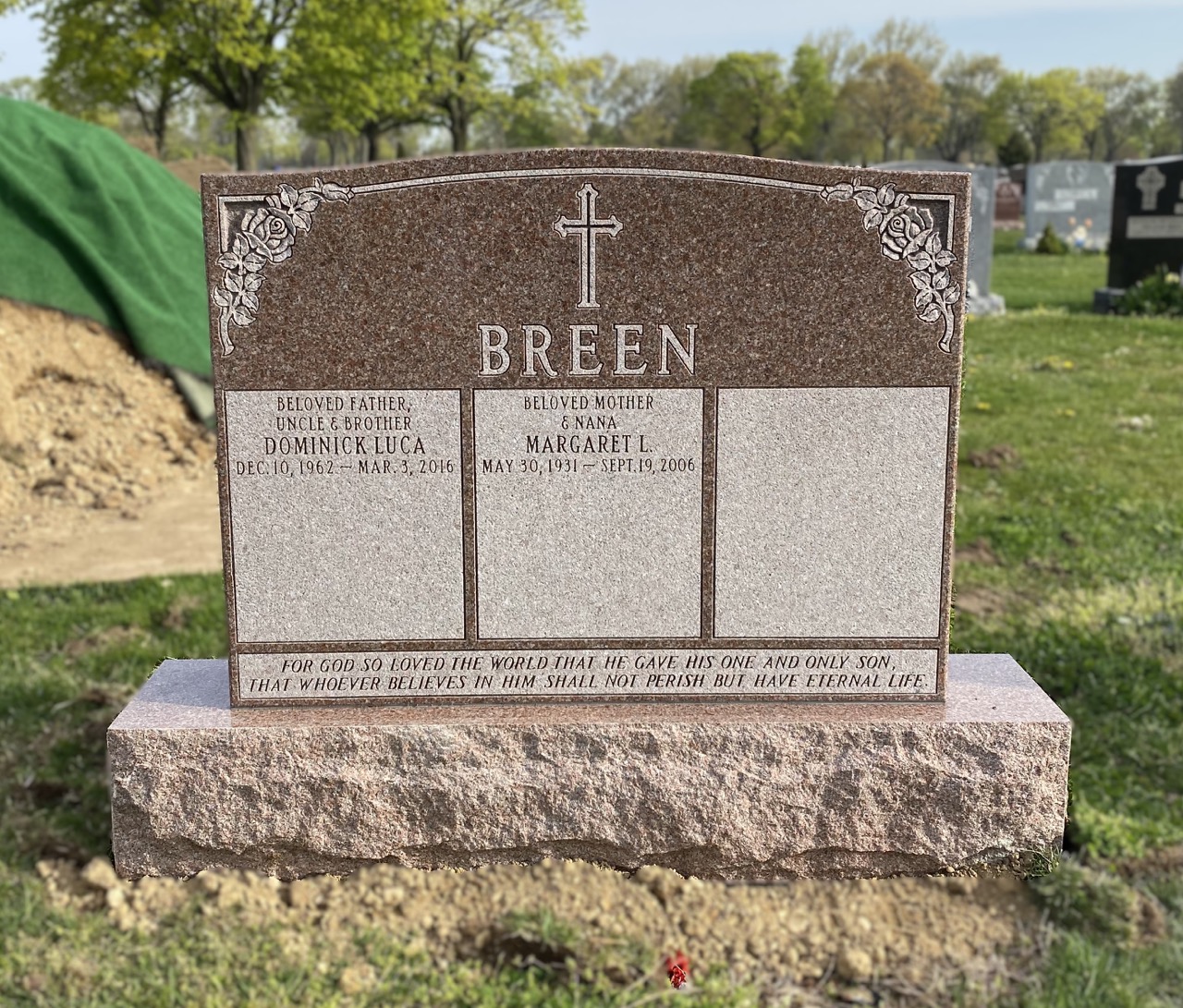
Granite vs. Bronze vs. Marble: Choosing a Headstone Material That Lasts
At St. Charles Monuments, we’ve served our Long Island community for decades. During times of incredible difficulty, grief and stress, we maintain a firm commitment towards providing guidance, support and compassion that make your burden a little easier to carry. One of the most common questions families ask us is a simple one: which material should we choose for the headstone?
The honest answer is that there is no single “best” material. Granite, bronze and marble each have real strengths, and the right choice depends on the type of memorial you want, the cemetery’s regulations, and the look you have in mind. In this guide, we’ll compare all three so you can decide with confidence.
Table of Contents
- The Short Answer
- Granite vs. Bronze vs. Marble at a Glance
- The Benefits of a Granite Headstone
- The Benefits of a Bronze Memorial
- What About Marble?
- Which Material Should You Choose?
- Frequently Asked Questions
The Short Answer
For most families choosing an upright monument or traditional headstone, granite is the material we recommend. It is the most durable stone available, resists staining and weathering, holds inscriptions crisply for generations, and comes in more than twenty colors. Bronze is the right choice when you want a flat memorial plaque, raised lettering, or the classic combination of a bronze plaque mounted on a granite base. Marble offers a beautiful, traditional white look, but it is softer than granite and its inscriptions soften with weathering over the decades, so it requires more care.
Granite vs. Bronze vs. Marble at a Glance
| Granite | Bronze | Marble | |
|---|---|---|---|
| Durability | Exceptional. Does not stain, deteriorate or shatter; withstands Long Island winters | Exceptional. Raised lettering stays legible for generations | Good, but softer stone; inscriptions gradually soften with weathering |
| Maintenance | Very low. Water, a clean cloth and a touch of dish soap | Low. Water or a non-ionic detergent; develops a patina over time unless polished | Higher. Prone to staining and biological growth; needs gentle, regular care |
| Personalization | Excellent. Laser etching, sandblasting, hand carving, cameo photos, any inscription | Very good. Cast raised lettering, emblems and removable plates | Good. Carves beautifully, but fine detail wears faster |
| Appearance | Rich color and texture in 20+ granite colors | Warm metallic sheen; formal, classic look | Classic white or veined stone; traditional elegance |
| Typical use | Upright monuments, slant and flat markers, benches | Flat memorial plaques, often on a granite base; civic and veteran memorials | Statuary and traditional monuments where permitted |
The Benefits of a Granite Headstone
1. Durability and Longevity
When purchasing a headstone for a friend or family member, you want it to last as long as possible. You not only want it to last over the years, but to remain elegant, beautiful and a fitting tribute for as long as possible. This is what makes granite an ideal material for a memorial.
Unlike many other materials, granite doesn’t stain, deteriorate or shatter. Its ability to weather unforgiving elements and inclement weather is far superior to the alternatives. Granite headstones remain alluring and intact, with their epitaphs and inscriptions vivid, for many years to come, and granite naturally resists the discoloration that affects other memorial materials between seasons.
2. Easy Maintenance
Part of ensuring a monument stays beautiful is regular cleaning and maintenance. Granite is a much easier material to clean and maintain, and thus far simpler to keep beautiful. If a granite headstone collects hard water spots, moss or other debris, a little water, a clean cloth, and perhaps a touch of dish soap is all you need to restore its radiant craftsmanship. Our guide on how to care for your monument covers the full routine.
3. Versatility in Design
Artists and technicians can execute high-precision laser etching and sandblasting techniques flawlessly on granite. As a result, the headstone can feature virtually any image, symbol or inscription that you feel best represents your loved one. You can order a headstone as specific, personalized and meaningful as you wish, and you’ll have the opportunity to add new lettering in the future if you need to.
4. Beauty and Color Choice
We want the memorials of our loved ones to be the perfect representation of their lives and legacies, so they must look as magnificent as our loved ones deserve. At St. Charles Monuments, we offer more than twenty granite colors, each with an extraordinary richness and texture that makes for stunning, one-of-a-kind granite upright monuments.
The Benefits of a Bronze Memorial
Bronze is the other material that makes for a truly long-lasting memorial, and for certain monument types it is the better fit.
Raised Lettering
The lettering on a bronze memorial is raised rather than etched into stone. Raised lettering wears far more slowly than an incised inscription, keeping names and dates legible for generations.
Removable Plates
Bronze memorials commonly use removable plates to display information. This allows a simple, lower-cost way to add an inscription later, for example when a companion plot is used and a spouse’s information must be added years afterward.
Simple Cleaning
Cleaning a bronze memorial can be done with just water or a non-ionic detergent. Because upkeep is so easy, families tend to clean bronze more often, which helps the memorial retain its beauty that much longer. Left unpolished, bronze develops a natural patina; some families love this aged character, while others prefer to maintain the original sheen.
Strength by Composition
Bronze is an alloy of copper with tin and other elements, which gives it a durable character and a warm metallic sheen. The ease with which bronze can be cast and carved allows real freedom in design and lettering styles, including strikingly complex decorations. You can see the range of options on our bronze memorial plaques page.
What About Marble?
Marble is the material of classical statuary and many historic cemeteries, and its bright white and softly veined varieties remain a beautiful, traditional choice. It carves exceptionally well, which is why it has always been favored for angels, religious figures and other sculpted memorials.
The trade-off is that marble is a softer, more porous stone than granite. It is more prone to staining and biological growth, and fine inscription detail gradually softens as the surface weathers over the decades. If you love the marble look, be prepared for more attentive care, and check your cemetery’s rules, as some cemeteries limit which materials they allow.
Which Material Should You Choose?
- A traditional upright monument or headstone: choose granite. It offers the best combination of durability, low maintenance, personalization and color choice.
- A flat memorial plaque, or a veteran or civic memorial: bronze is the classic choice, with raised lettering and emblem options.
- The best of both: many families choose a bronze plaque mounted on a granite base. The granite base helps keep the bronze cleaner and more vibrant, and gives the memorial a more regal appearance.
- A sculpted, classical look: marble, where the cemetery permits it and the family is comfortable with the extra care.
Material is just one of the decisions involved in choosing a memorial. Cemetery regulations, monument type, budget and design all play a part, and we walk through every step in our complete guide to choosing a cemetery monument.
Frequently Asked Questions
Which lasts longer, granite or bronze?
Both will outlast a lifetime by a wide margin. Granite is the most durable stone used for memorials, and bronze’s raised lettering keeps inscriptions legible for generations. For practical purposes, either material, properly made and installed, is a permanent memorial.
Is marble a good choice for a headstone?
Marble is beautiful and carves wonderfully, but it is softer and more porous than granite. Inscriptions soften with weathering and the stone needs more care, so we usually recommend marble for families who specifically want its classical look and are prepared to maintain it.
Can you combine bronze and granite?
Yes, and it’s one of the most popular combinations we craft: a bronze plaque mounted on a granite base. The base protects the bronze, keeps it cleaner, and elevates the memorial’s appearance.
How do I clean each material?
Granite needs only water, a clean cloth and a touch of dish soap. Bronze can be cleaned with water or a non-ionic detergent. Marble should be cleaned gently with water and a soft brush, avoiding acidic or abrasive cleaners.
Choosing Your Memorial with St. Charles Monuments
At St. Charles, we aim to deliver a headstone and an experience that eases the difficulty that comes in times of grief. Whether granite, bronze, or a combination of the two, our goal is to help you pay tribute to your lost loved one and provide you with a beautiful, worthy place to visit them in the years to come. Stop by our West Babylon showroom to see our granite colors and bronze work in person.